


April 2026 Save Our Lagoon Citizen Oversight Committee Meeting Highlights
The Save Our Indian River Lagoon (SOIRL) Citizen Oversight Committee (COC) met on April 17th, 2026, in Viera to review progress across the program and hear from local partners working on stormwater solutions and community engagement across Brevard County.
From program updates to hands-on community projects, the meeting highlighted the many ways residents, organizations, and local governments are working together to protect the lagoon.
Program Progress and Fiscal Reports
SOIRL staff reported continued project implementation and community participation across
Brevard County. As of this meeting, 128 community projects and 2,457 homeowner projects have been completed to date through the SOIRL Project Plan.
Key project updates since the March meeting include:
- 2026 Annual Report completed
- Homeowner Association Pond Pilot Program (Grant IRL2024-08) – completed
- Quick Connects – 5 more agreements executed (574 total)
- Septic Upgrades – 43 more completed (752 total); 1,217 agreements executed
- Leaky Lateral Repairs – 6 more completed (40 voluntary repairs total); 757 out of 786 code cases resolved
- Contracts executed – including Grant Street WRF Amendment 5, State Grant LG028, and Eau Gallie Muck Engineer of Record renewal
- Videos – Osprey Pond Aeration completed
- Derelict Vessels Removed – 1
These projects are part of ongoing efforts to reduce nutrient pollution and improve water quality in the Indian River Lagoon.
Monthly Revenue Graph & Financial Statements
Fiscal Analyst Lori Pierce reported:
- $517 million in total revenue since program inception
- $71.2 million assigned to ongoing projects
- $15.6 million in FY2026 expenditures to date
Pond Pilot Program – Results and Lessons Learned
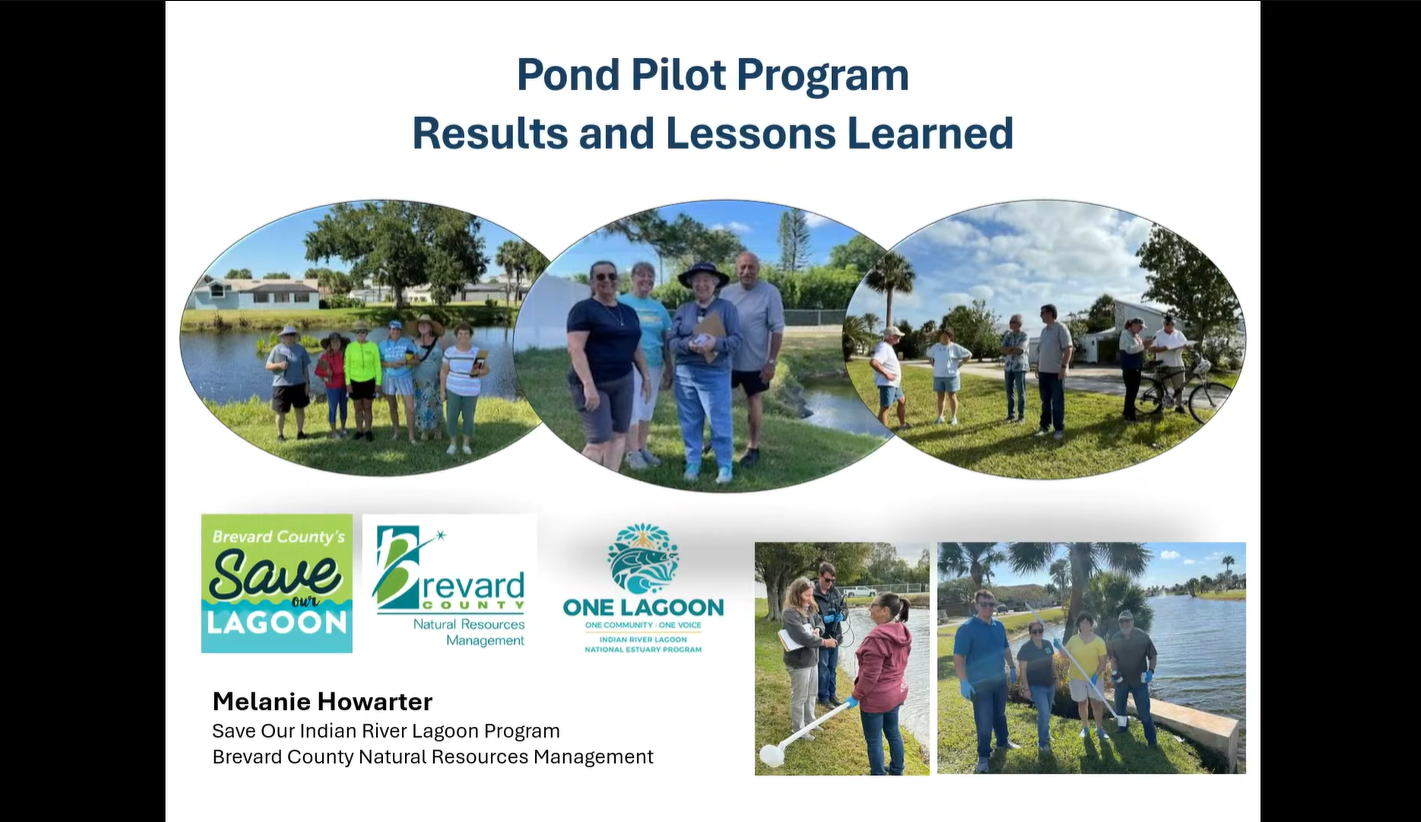
Environmental Specialist Melanie Howarter presented findings from a pond pilot program funded through a grant from the Indian River Lagoon National Estuary Program (IRLNEP), with matching funds provided by SOIRL.
The pilot program focused on education and outreach to engage local homeowners associations (HOAs) in improving stormwater pond maintenance and reducing stormwater-related pollution entering the Indian River Lagoon.
Four HOAs participated in the program, with activities including:
- Monthly water quality sampling led by trained volunteers
- Pond assessment field days
- Implementation of pond improvement projects
Water quality monitoring focused on nitrogen, phosphorus, and chlorophyll-a to better understand nutrient conditions in stormwater ponds. Results showed consistently elevated nutrient levels across all ponds, with seasonal variation and differing conditions by site.
Findings also highlighted the importance of:
- Matching best management practices (BMPs) to site conditions
- Simplifying participation for HOA volunteers
- Providing clear, accessible educational materials
- Encouraging community-based participation to increase engagement
Panel on Homeowner Projects to Reduce Stormwater Impacts
As part of a panel discussion on stormwater impacts, several speakers shared examples of community-based approaches to reducing runoff and improving local conditions.
Low Impact Living and Stormwater Management
Dr. Laura Wilson of the Marine Resource Council (MRC) presented on low-impact development strategies, which focus on keeping rainwater where it falls to reduce runoff and allow infiltration into the ground. These approaches can include permeable surfaces, rainwater harvesting, tree preservation, and bio-swales.
Dr. Wilson also discussed the potential for homeowner grant programs to support the implementation of these strategies on private properties.
Community Engagement and Green Infrastructure
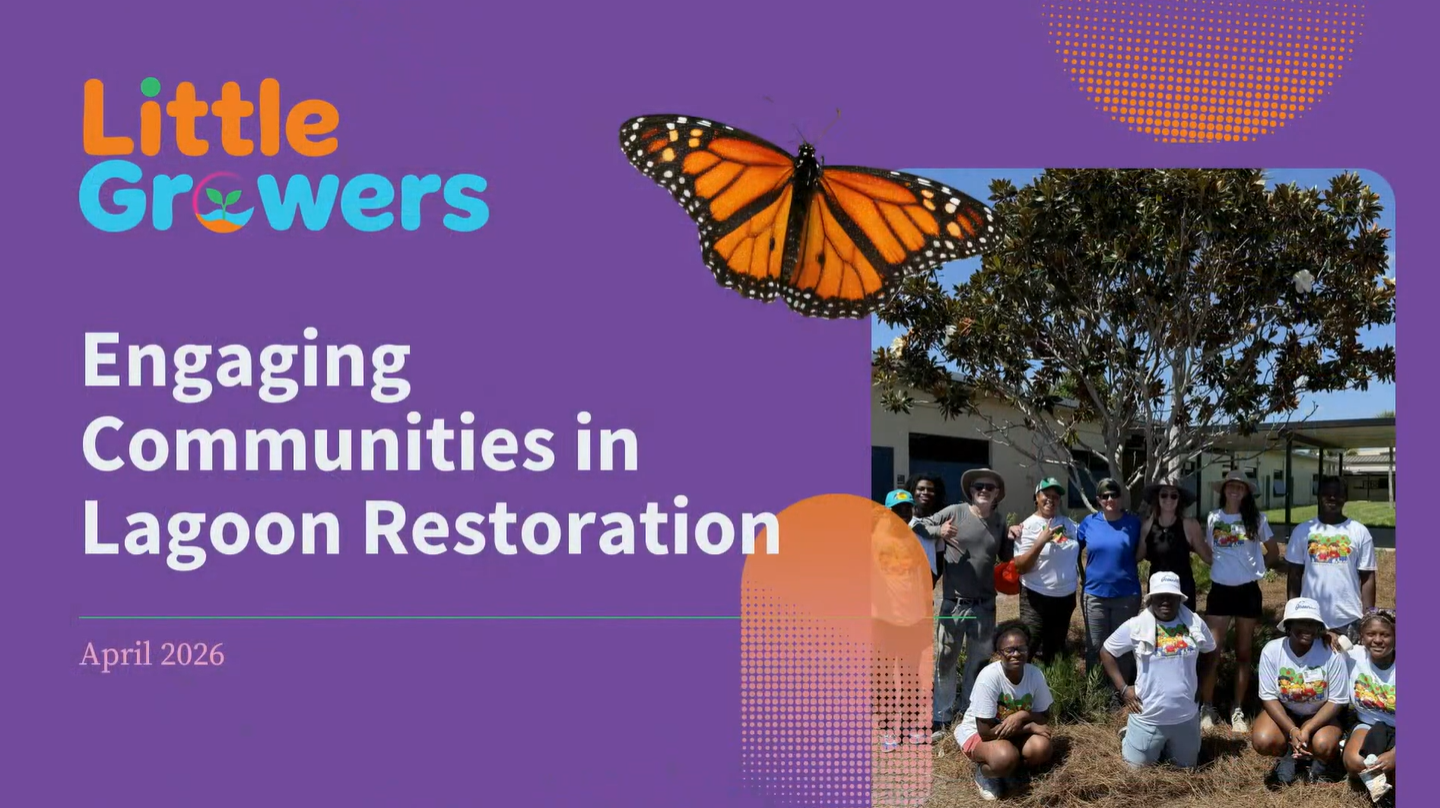
Camille Hadley of Little Growers shared strategies for engaging residents through hands-on education, youth programs, and community-led green infrastructure projects. Little Growers organizes volunteer events and educational opportunities for youth and adults to learn about the environmental challenges facing the Indian River Lagoon and contribute directly through hands-on volunteer work.
The organization has planned a series of plantings and green infrastructure projects in Melbourne, including the Jackson Street Food Forest, Stone Middle School Pollinator Prairie, and Richards Park Shoreline Restoration. Not only do these plantings provide wildlife habitat and filter pollutants into the lagoon, but many of the gardens also provide food for the residents, strengthening the connection between locals and nature.
Swales and Neighborhood Stormwater Solutions
Vinnie Taranto of the Indialantic Sustainable Community and Resiliency Committee presented on the role of swales in stormwater management. Swales are shallow vegetated channels designed to manage water runoff, filter pollutants, and increase rainwater infiltration into the soil.
Mr. Taranto described the Town of Indialantic's approach to incorporating swales into the community to improve water retention and reduce stormwater impacts. The town supports homeowners in the planning and installation of swales on their properties, and provides educational resources on the benefits of swales in stormwater management to encourage broader program participation.
Rain Barrel Rebate Program
J. Danielle Straub, Assistant City Engineer for the City of Melbourne, presented on the city's rain barrel rebate program. Rain barrels collect and store rainwater captured from rooftops for use in watering plants or cleaning outdoor surfaces. By retaining stormwater at the source, rain barrels help reduce runoff. The slow return of the water allows time for it to be filtered before it enters the groundwater. The City of Melbourne, in partnership with Green Gables, offers rain barrel workshops to educate residents on proper use and distribute rain barrels throughout the community.
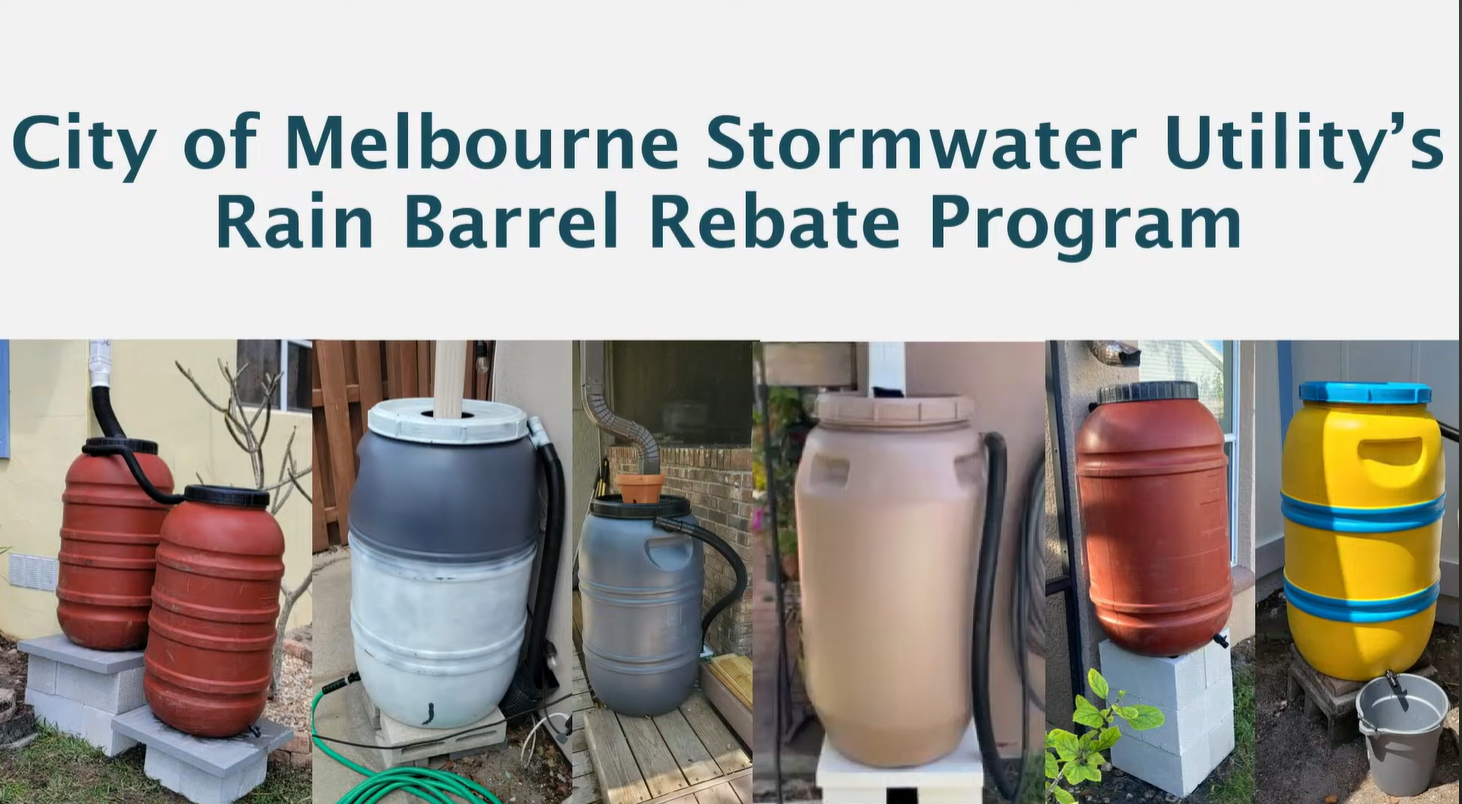
Following the presentations, the four panelists participated in a discussion with members of the Citizens Oversight Committee about strategies for engaging and connecting with community members about stormwater management practices.
Let’s Make Waves: How Citizen Oversight Committee Members Can Help Brevard Residents Learn About the Save Our Indian River Lagoon Program
Deb Harmon of the Citizens Oversight Committee presented on strategies to expand community awareness of the SOIRL program.
The presentation clarified the distinction between:
- Education: providing information
- Outreach: connecting with new audiences
- Advocacy: encouraging specific actions
As an advisory body, the COC is limited to educational and informational activities in its official role. The presentation emphasized opportunities to:
- Share factual program information
- Connect residents with available resources
- Encourage broader community understanding of lagoon restoration efforts
Looking Ahead: Funding Application Updates
The committee also discussed updates to project funding applications, with a focus on capturing additional environmental benefits beyond nitrogen reduction.
The group voted to move the concept forward and refine the language, with a final version expected to return for consideration at the May meeting. The updates are intended to improve awareness of broader project impacts rather than change how projects are scored.
A Continued Community Effort
This month’s meeting shows how lagoon restoration is happening at many levels, from large infrastructure projects to neighborhood initiatives and individual actions.
Whether through stormwater improvements, community projects, or education and outreach efforts, work is continuing across Brevard County as part of our community’s effort to help protect the Indian River Lagoon.


