


March 2026 Save Our Lagoon Citizen Oversight Committee Meeting Highlights
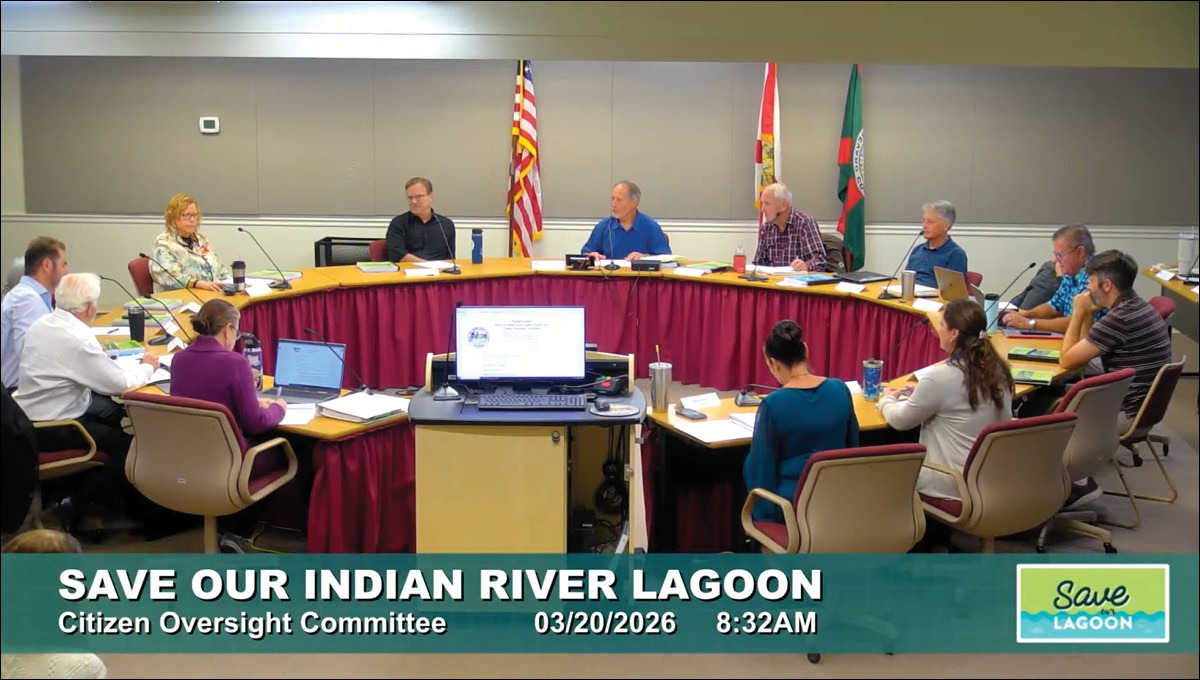
The Save Our Indian River Lagoon (SOIRL) Citizen Oversight Committee (COC) met on March 20, 2026, at the Brevard County Government Center in Viera. The committee received monthly and fiscal updates from SOIRL staff and heard presentations on dolphin health, the lagoon’s economic value, and the leaky lateral repair program.
Program Milestones at a Glance
As of March 2026, the SOIRL program has reached the following cumulative totals:
- 128 community projects completed
- 2,408 homeowner projects completed
- 987 septic tanks converted to sewer connections
- $513 million collected since program inception
The program is approaching its 1,000th septic-to-sewer connection, expected in the coming weeks.
Projects Underway
Program Director Virginia Barker presented the monthly progress report. The SOIRL program also received the East Central Florida Diamond Awards' highest regional honor at the February 25 ceremony, with Commissioner Altman in attendance.
Key projects currently underway include:
Septic to Sewer
- Sykes Creek Zone T: Vacuum pit installation nearly complete
- South Beaches Zones O and P: Contractor purchasing materials; groundbreaking expected April 26
- South Central Zone A: Construction bid advertised March 9
- West Melbourne (Lake Ashley and Dundee Circle): Sewer lines and laterals installed
Stormwater
- Cocoa Beach Ramp Road Park stormwater project is under construction
- Flamingo Drive Basin (south end): Construction to begin late March
- South Babcock Bioreactor: Construction to begin late March
Muck Dredging
- Eau Gallie: Preparing dewatering site, reviewing pre-construction submittals
- Grand Canal: Nearly 800 native plants installed around the dewatering site
- Sykes Creek: Moving forward with construction bid
- Mims Rim Ditch: Beginning procurement of a design and permitting consultant
Monthly Financial Update
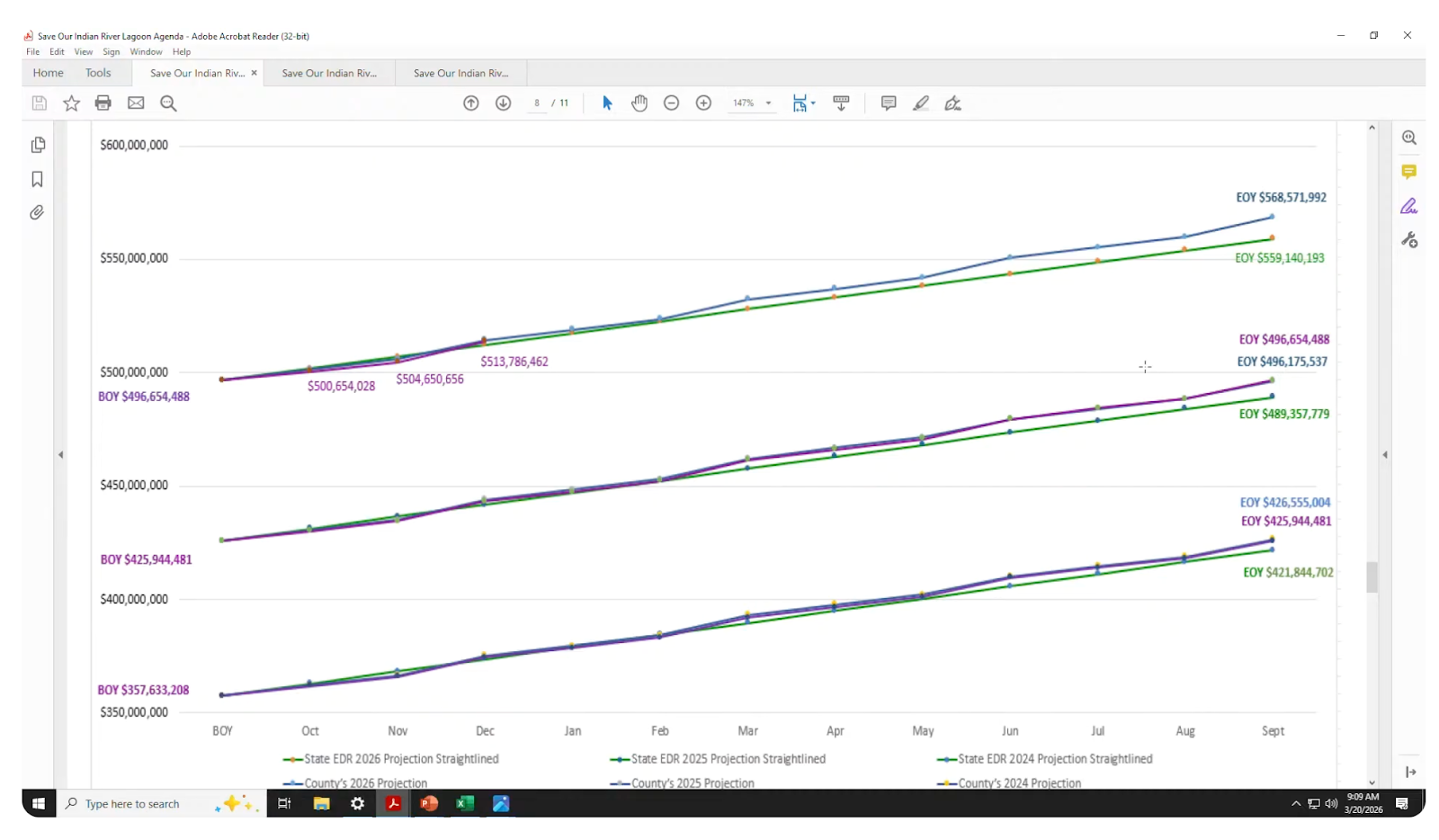
Fiscal Analyst Lori Pierce presented the monthly revenue graph and financial statements for the program, which has collected approximately $513 million in revenue since inception. Year-to-date revenues for Fiscal Year 2025–2026 include $7.99 million from the voter-approved half-cent sales tax and $4.58 million in interest earnings.
Program expenditures continue to support a mix of capital projects, grants to local governments, and homeowner and community-based projects, with funding allocated across wastewater, stormwater, and lagoon restoration efforts.
Special Presentation: The Health of Indian River Lagoon Dolphins
Wendy Noke, Research Scientist II at Hubbs SeaWorld Research Institute, presented findings from years of monitoring the Indian River Lagoon's resident bottlenose dolphin population.
About the population
The Indian River Lagoon is home to a resident dolphin population that has been studied since the 1970s and is managed as a separate stock under the Marine Mammal Protection Act. Aerial and vessel surveys conducted between 2002 and 2007 estimated approximately 1,000 dolphins living in the lagoon. Telemetry studies show these animals have a relatively small home range of about 17 miles, meaning local environmental conditions strongly influence the population.
Nutritional condition over time
Following a major phytoplankton bloom in 2013, the lagoon lost significant seagrass. That same year, 77 dolphins died in what became one of the largest unusual mortality events recorded in the lagoon, alongside more than 100 manatees and hundreds of pelicans. Research found that dolphins shifted to less nutritious prey after the bloom, requiring them to consume an estimated 15% more food to maintain the same energy levels.
Body condition monitoring in the years since:
- 2013: 70% of free-swimming dolphins found to be underweight
- 2017: 70% still underweight
- 2023: 93% of animals assessed in poor body condition; 68% classified as thin, 25% as emaciated
Avian influenza findings
Over the past three winters, researchers documented an increase in dolphin strandings in Brevard County, with animals showing signs of brain inflammation. Testing revealed that 10 dolphins tested positive for highly pathogenic avian influenza, only the second documented instance in U.S. history. All cases occurred between Titusville and Melbourne Beach. Researchers believe the animals may be acquiring the virus through close contact with infected birds while foraging.
Neurotoxin exposure
Research found neurotoxin levels in dolphin brain tissue approximately 3,000 times higher during harmful algal bloom season. The animals showed protein and gene expression changes consistent with neurodegeneration. The study authors note that additional research is needed to draw broader conclusions.
Entanglements
Reported entanglements have increased significantly in recent years:
- Historically: 1 to 2 per year
- 2024: 16 entanglements
- 2025: 12 entanglements
- 2026 (to date): 3 active cases
The majority involve juvenile dolphins and calves. Approximately 86% of entanglements involve monofilament or multifilament fishing line. Researchers are using drones and remote disentanglement tools to respond to cases more quickly. Noke noted that if residents spot a dolphin that appears entangled or is swimming erratically, reporting it quickly gives rescue teams the best chance of a successful response.
Published research from Hubbs SeaWorld Research Institute on these topics is available in peer-reviewed journals.
Special Presentation: The Economic Value of the Indian River Lagoon
Committee members Fred Goldstein and Curt Smith presented a review of a recent economic study of the Indian River Lagoon conducted by the Balmoral Group for the IRL National Estuary Program, funded in part by NOAA and the U.S. EPA.
What the lagoon contributes economically
The study estimates that the Indian River Lagoon generates approximately $28.3 billion annually in economic impact across the region. This includes:
- $17 billion in direct spending
- $5.8 billion in indirect economic activity
- $4 billion in induced impacts
Together, these activities support more than 128,000 jobs and contribute roughly $14 billion in value to the regional economy.
In addition to economic activity, the lagoon provides ecosystem services valued at more than $10 billion annually, including water filtration, flood protection, habitat support, and recreational opportunities.
Return on investment from restoration projects
The study also evaluated the benefits of selected restoration projects funded through NOAA. Across multiple case studies, projects generated measurable benefits such as improved water quality, habitat restoration, and increased resilience.
For example, a salt marsh restoration project at Caron Bay cost approximately $383,000 and produced an estimated $2.79 million in benefits over 10 years, a return of about 7.3 to 1.
Overall, the report found that restoration investments can produce substantial economic returns, with benefit-cost ratios varying by project type and location.
Leaky Lateral Repair Program Update
Contract Administrator Josh Hibbard updated the committee on the county's program to find and repair leaking sewer lateral pipes, which can allow rainwater to enter the sewer system and increase the risk of overflows.
Since the last update:
- 38 more code enforcement cases resolved (757 of 786 total resolved)
- 14 more voluntary repairs completed
- Total repairs now exceed 1,200
New data showed lift station performance before and after smoke testing and repairs. At three of the four stations presented, the system now runs at a more consistent rate during rainfall events, suggesting reduced inflow and a lower risk of overflow. The fourth station showed less improvement, which staff attributed to new development in the service area during the same period.
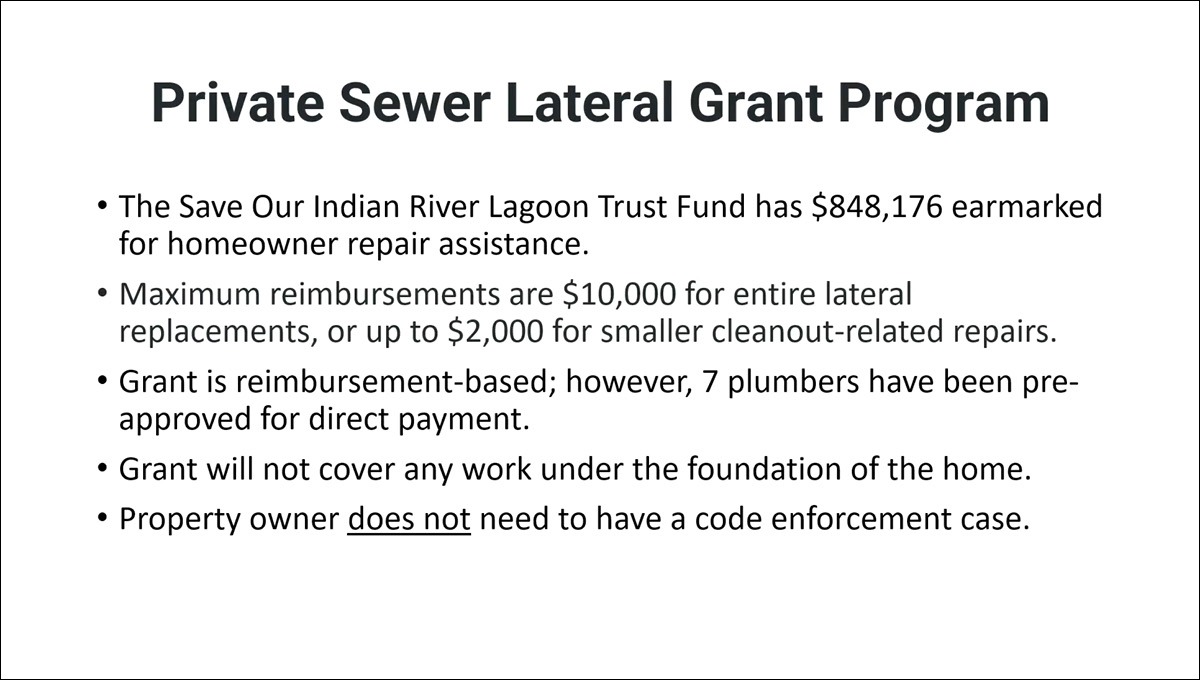
The program offers reimbursements of up to $10,000 for a full lateral repair and up to $2,000 for a cleanout repair. Homeowners do not need an active code enforcement case to apply. Staff are currently meeting with individual cities to encourage smoke testing in areas not yet covered.
Video Feature: Lucky Clover Mobile Home Park
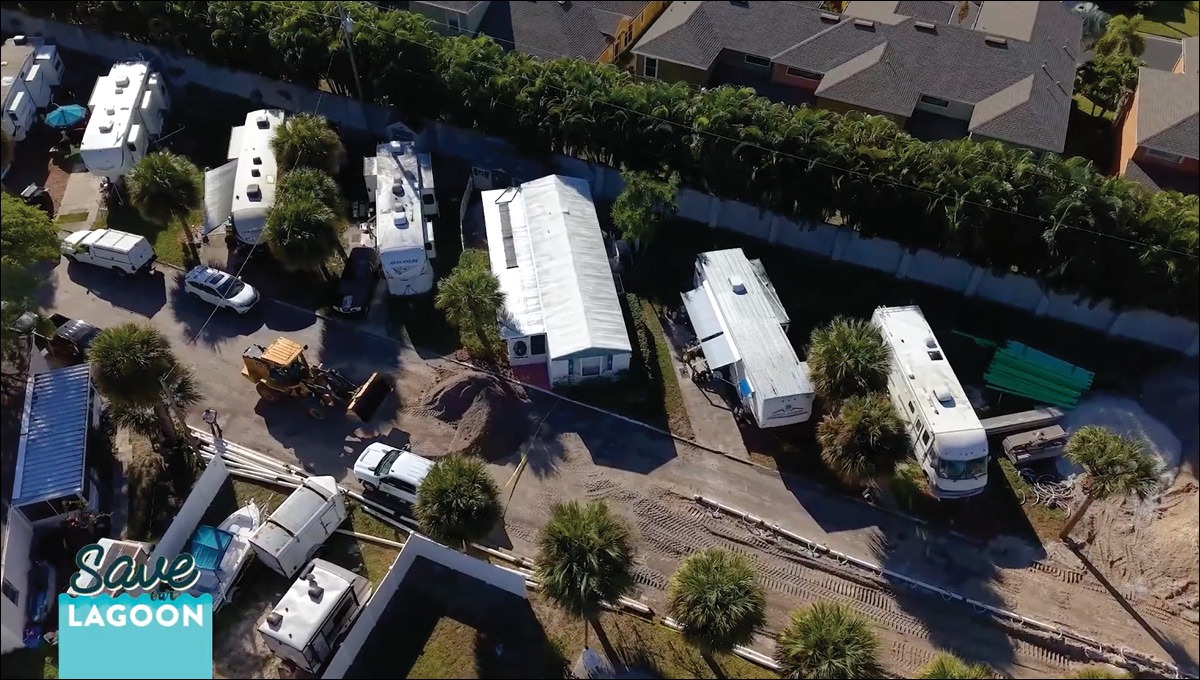
The committee viewed a short video documenting the Lucky Clover Mobile Home Park sewer conversion project in Indian Harbor Beach. The project decommissioned 58 septic tanks and connected 120 manufactured housing units to public sewer. The project was funded through the SOIRL program and the Florida Department of Environmental Protection.
Nanobubble Water Treatment Pilot at Titusville Marina
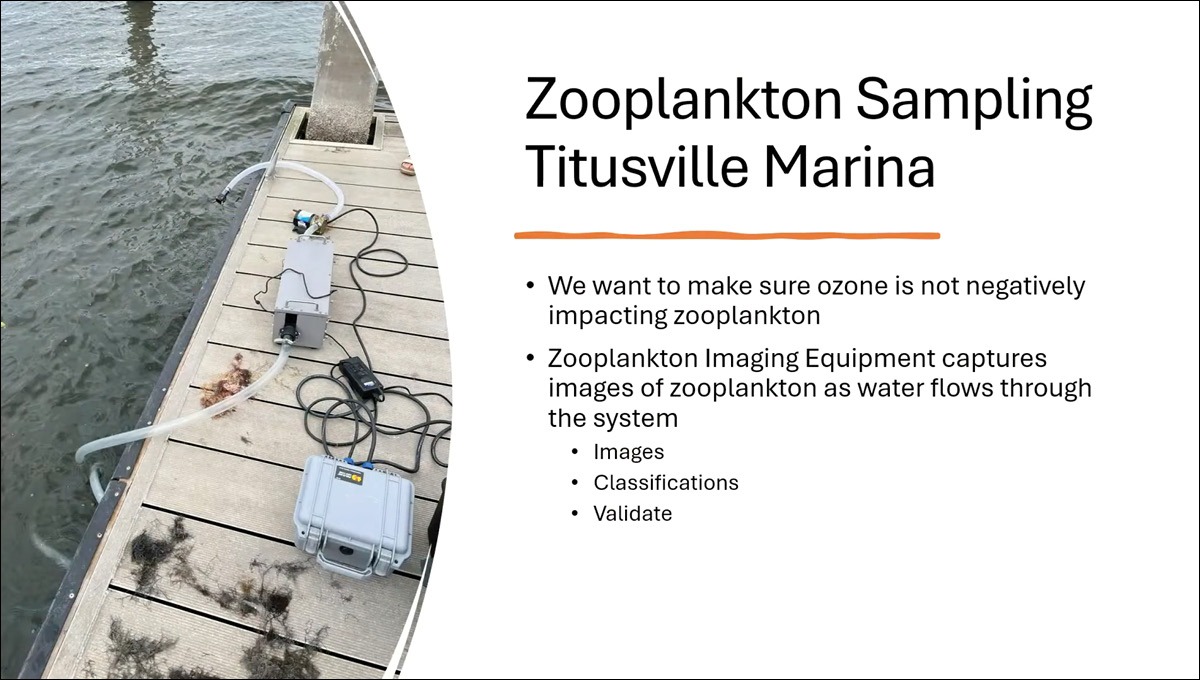
Environmental Specialist Aleah Ataman presented on a privately funded pilot project at the Titusville Marina that injects ozone-enriched nanobubbles into the water to evaluate their potential to break down accumulated muck on the marina floor.
SOIRL staff are conducting independent monitoring of zooplankton at the site using a new underwater imaging system. The goal is to assess whether the ozone treatment has any effect, positive or negative, on the small organisms that form the base of the lagoon's food web. The pilot is currently in a troubleshooting and calibration phase. The project is funded for six months, with a possible extension to one year if results warrant further study.
Funding Application Process Discussion
The committee continued a discussion, tabled from February, about the annual funding application form used by municipalities, organizations, and property owners to apply for SOIRL project funding. Topics included:
- Whether to require longer-term signage at completed project sites
- Whether to collect more information about herbicide and pesticide use by applicants
- How to track and follow up on funded projects that have not yet begun
- How the committee scores and prioritizes projects beyond nitrogen load reduction
No motions were passed. The committee agreed to review the application portal and contract documents before returning to the topic at a future meeting. Program Manager Terri Breeden will distribute links to the portal and a sample contract for committee review.
Upcoming Events and Volunteer Opportunities
Science Forums and Public Events
- April 9: ShORE Symposium
- April 11: Arbor Day Garden Festival, Melbourne Beach Nature Day, Botanical Fest
- April 18: Enchanted Forest Sanctuary Earth Day Event
Volunteer Opportunities
- March 28: Marine Resources Council Invasive Species Removal
- April 3: Marine Resources Council First Friday Litter Patrol
- April 10: Marine Resources Council Mangrove Workshop
- April 11: Waterway Warriors SR-528 Cleanup / Keep Brevard Beautiful Trash Bash
- April 22: Marine Resources Council Earth Day Trash Cleanup
- April 25: Waterway Warriors and Marine Resources Council Earth Day events
Watch the Full Meeting
For more information about the Save Our Indian River Lagoon program, visit brevardfl.gov/SaveOurLagoon
The next COC meeting is scheduled for April 2026.


